Split Ends
On holding on while letting go

I spent last December moonlighting as a nanny for a family on the Upper East Side. My weekday evenings were devoted to answering the youngest child’s pressing questions about Rudolph’s light-emitting nose and how the Elf on the Shelf managed to enter his bedroom while he slept. The eldest recruited me to curate a care package for their recently departed au pair—we settled on a photo collage, heart earrings, and an “I ♥ NY” mug. Meanwhile, the middle child, as we pulled into our usual parking spot outside the ice rink, demanded I stop wearing makeup because I “look better without it,” then promptly screamed out the open car window that she was being kidnapped and needed urgent help. I successfully convinced two alarmed passersby that I was, in fact, not abducting her, and merely a means of transportation to hockey practice.
It was entertaining to say the least!
The middle child (we'll call her Camilla) had quite the reputation among her siblings. She acted out on a whim, fervently disobeyed instructions, and did everything in her power to live up to her "difficult" brand. She ran around the house at dinnertime chewing her chicken quesadilla, escaping my grasp as I pleaded with her, certain she'd choke. Nothing delighted her more than bursting into her brother's room as I finished tucking him in, coaxing him out from under the weighted blanket, waving his prized stuffed animals in front of his heavy eyes.
Defying all reason, Camilla was my favorite. She was smart as a whip and passionately curious, and I found her personality endearing. Selfishly, I wanted to conquer the beast, to befriend her, to distinguish myself from the parade of babysitters that had cycled through the apartment over the years. So I pulled out a trick I hadn't used since my cousins were her age: I offered to braid her hair.
I proved myself that first day by executing double Dutch braids. It became our evening ritual, though I made it clear that my services were a privilege. Camilla understood the terms: cooperate at dinner, get her brother to sleep, and the reward was hers.
She knelt patiently on the floor as I brushed her hair each night, brainstorming which book she wanted me to read aloud afterward. The second she felt the tension ease as I secured the last hair tie, she'd dart to the walk-in closet and stare at herself in the mirror. Seeing her eyes light up at her reflection felt like my own quiet victory. Here was the so-called problem child, unrecognizably tender, propping up her pillows to ensure her braids would remain intact.
Watching her, I had flashbacks to my own girlhood.
As a middle schooler, I relished the step-by-step tutorials that flooded YouTube. I commandeered my dad's iPad during after-school hours while he was still at work so I could browse uninterrupted. One day, I tired of Michelle Phan and rainbow loom videos and stumbled upon CuteGirlsHairstyles—a Utah mom's channel I studied like a virtual textbook. I taught myself fishtails, messy buns, and braid crowns, recruiting friends to be my mannequins.
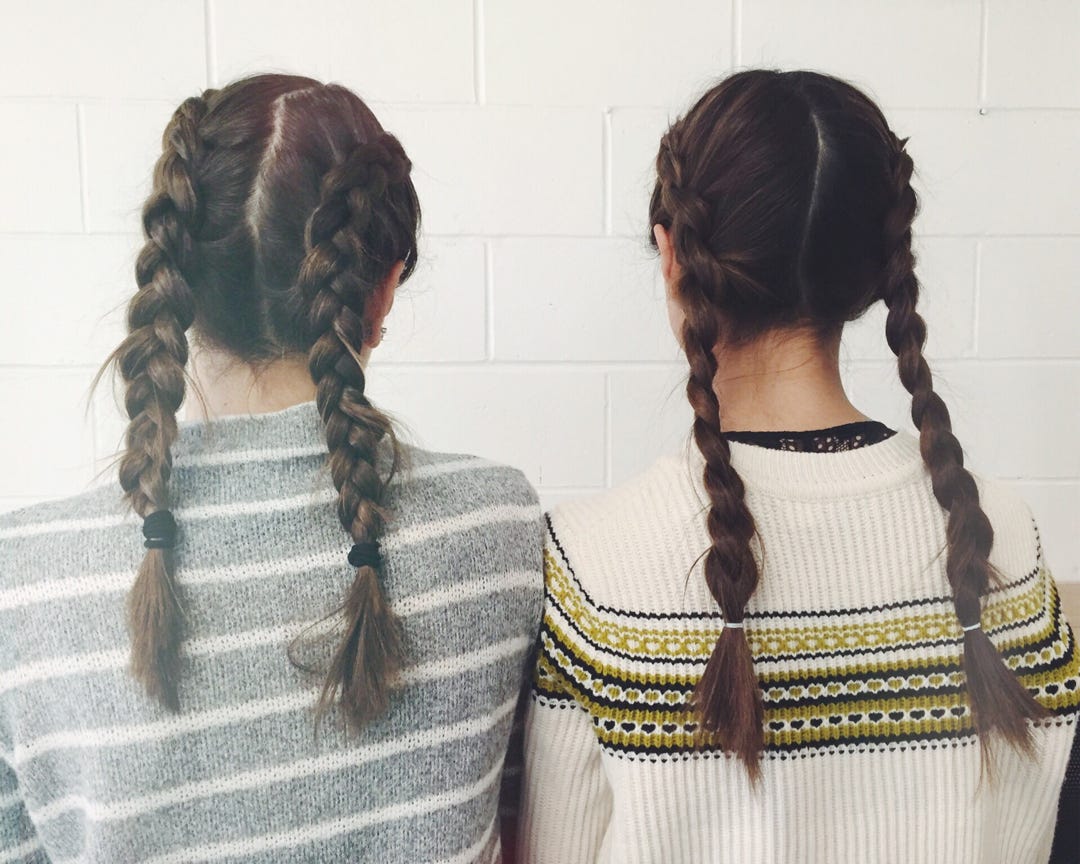
It was preferable to style other people—my arms didn't get sore, and my peers donned natural highlights and curls I envied. My own mane was too thick and slippery; standard black hair ties would fall out or break under the weight of a simple ponytail. I voiced my frustration getting ready for school dances, soccer games, and recitals, snapped elastics in hand. I brushed my hair once a week, dragging through it impatiently, and never touched the blow dryer wedged in the bottom drawer of the sink. My waves would air-dry anyway while I studied or FaceTimed a friend—it wasn’t worth the effort.
Inevitably, I only came to fully appreciate my hair after I experienced losing it.
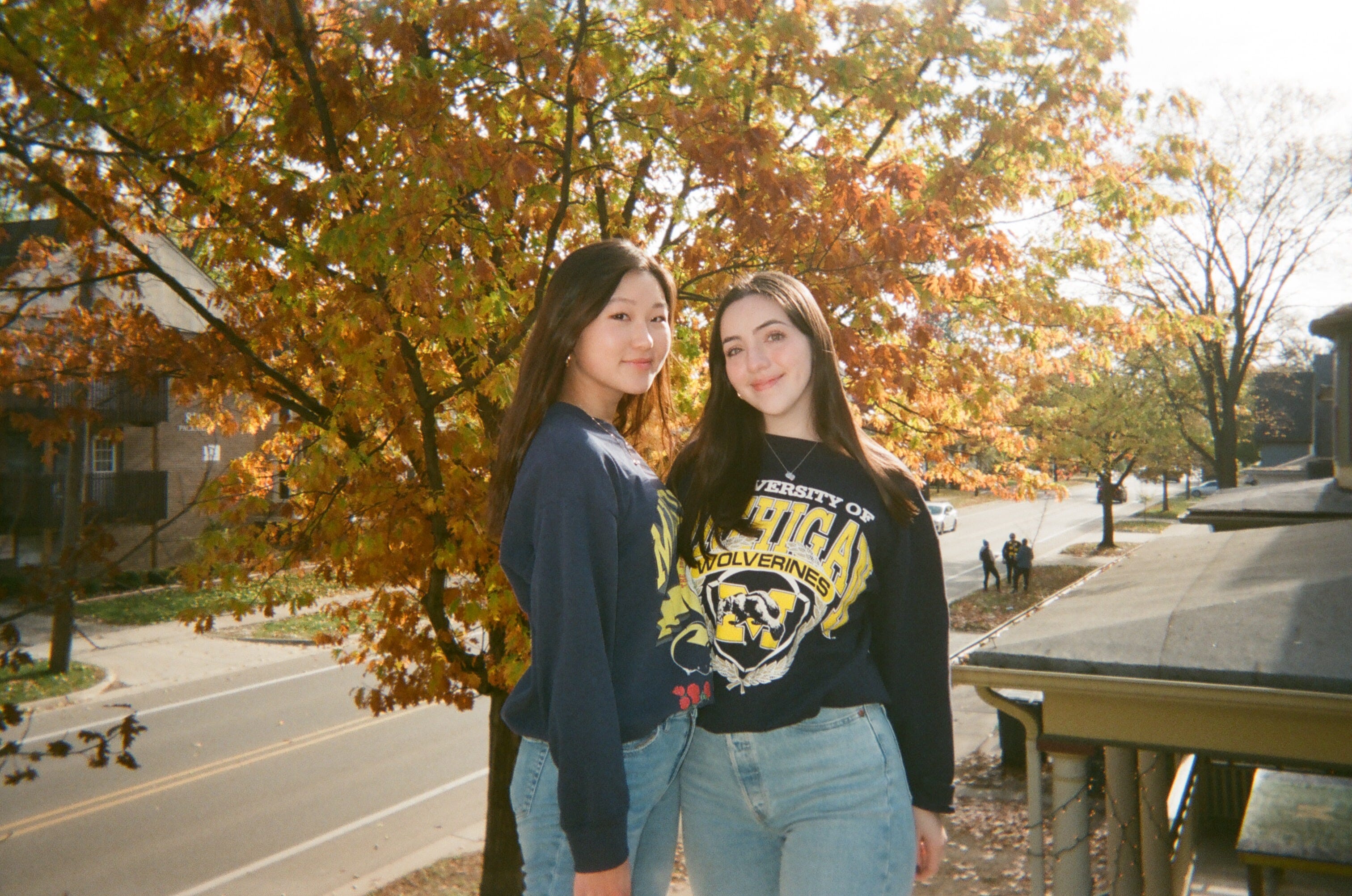
During the fall of my junior year, everything changed. It was the height of the pandemic and internship recruiting season. Double homicide. I felt unprepared for the first time in my life and existed in a state of perpetual anxiety. When my dad called with news of my mom’s hospitalization, I came undone. I booked a flight home to see her before he informed me doors were closed to everyone but essential medical personnel. I collapsed to the floor, helpless.
It turned out my body was keeping score. My roommates began complaining about the hair on the floor. It didn’t immediately register that it was mine. They pointed at the strands blanketing the hardwood in the kitchen and the white tiles in the bathroom. I went quiet, embarrassed. I chased the dark wisps with my vacuum, watching them spin inside the cyclone chamber, threatening to choke the machine into submission. A visit to the university health center assured me it was only a stress-induced phase of hair fall.
But over a year later, a photo taken in the living room of my first New York apartment said otherwise. My then-boyfriend had harmlessly captured me hunched on the couch, devouring chocolate. He laughed, finding humor in my bad posture and coated fingers, but all I noticed was the pronounced part at the back of my head. It was too visible. I retreated to my room, and the evidence mounted. I found clusters of hair nestled under my pillows and tendrils draped delicately on my pajamas. Soon, showers became a practice in restraint. I made a concerted effort to retrieve the accumulation by the drain before succumbing to tears. Outfits I’d imagined in my head didn’t look quite right in the absence of my usual mane, and I developed a critical gaze—scrutinizing facial features I felt were newly, uncomfortably exposed.
In the three years that followed, the shedding continued. I would weep, then chastise myself for being so vain. It's just hair. Yet there I stood, bent over the bathroom sink, counting the strands in my brush. In my desperation, I became relentless in my search for an explanation.
I saw dermatologists, rheumatologists, and holistic practitioners. I took more blood tests in four months than I had in my entire life. I explained, repeatedly, that I meditated, got my period regularly, and maintained a diverse diet. The results always confirmed what I already knew: hormones balanced, no deficiencies, everything within range. Not alopecia. Not pattern baldness. Stress-induced, they concluded confidently. The fourth time I heard those words, I screamed.
“I’M NOT STRESSED!” I insisted. “THIS SITUATION IS STRESSING ME OUT.”
I stormed out of my dermatologist’s office and cried on the sidewalk. Between sobs, I relayed the day’s defeat to my mom, who shared my disappointment. She knew the pattern by now—I’d enter a new practice with renewed optimism and leave discouraged, drained, and empty-handed. I paced for an hour before I stopped hyperventilating. When I finally returned home, I flipped through my tear-stained journal entries, taking stock of my losses. This pursuit had consumed me, and all I had to show for it was a bin of empty supplement bottles.
Someone once told me I had a contagious enthusiasm for life, and I no longer found that in myself. My confidence had been completely wrecked. Scrolling through my 2024 camera roll, I could count the photos I had of myself on one hand, and I didn't recognize the person I saw in them. My phone’s record confirmed what I already suspected: I was spending most of my time alone—at the park, in my room, or babysitting to avoid parties where I'd have to see people my age. I was self-conscious in new company, which was completely out of character. Scrolling further back, I saw the blunt chop I'd gotten in a frenzy the year prior, convinced my long hair was weighing me down and exacerbating the shedding. The smiling mirror selfies at the salon were juxtaposed with images of me in bed, eyes swollen from crying.
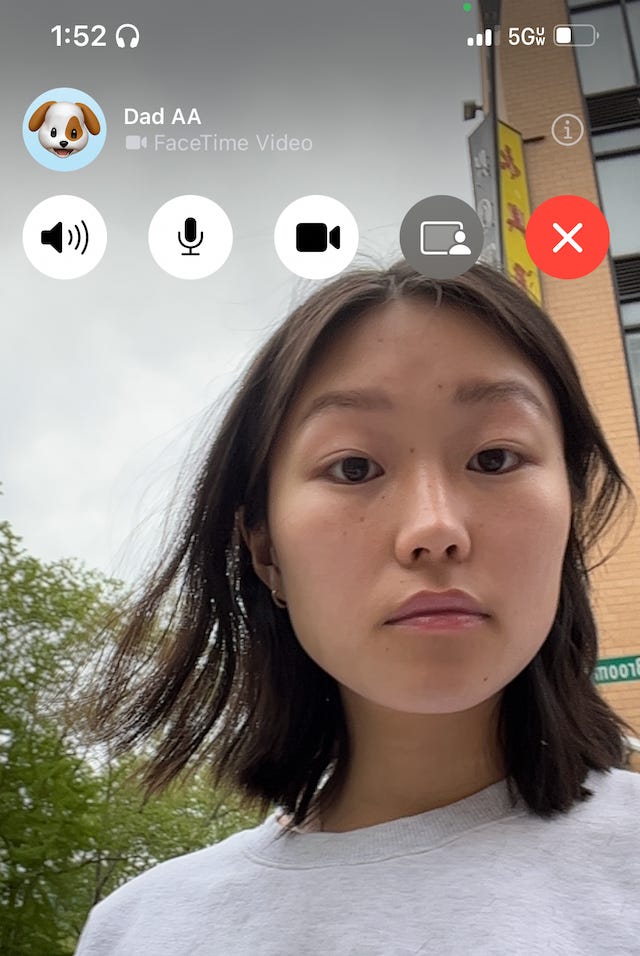
In my hyperfixation, I had lost sight of the bigger picture. My identity was determined by what was inside, not out—and this fact had escaped me entirely as I charged ahead with tunnel vision. Being sad was exhausting. I finally had enough.
The next day, I decided I was done grieving. I journaled these words repeatedly until they took hold:
What can you do when you’ve lost something and can’t get it back?
You have to let go.
On the eve of my cousin's wedding in November, my whole family bustled around our Airbnb getting ready. In the upstairs hallway bathroom, my cousins and I crowded around my grandma as she did her hair. We looked on as she took out her rollers one by one, twirling the curls with her fingers, layering them strategically to cover sparse patches. She looked dissatisfied with her work and frowned when the volume refused to hold. I grabbed my tools from the counter—still hot from refreshing my mom's blowout—and began styling the back of her head, enlisting my younger cousin Maddie on hairspray duty. When I finished, the five of us faced the mirror, smiling at my grandma's expression.
She beamed on the dance floor that night. I watched from my table as she spun in her hanbok, laughing alongside her children. My mom donned her signature bob, the one she'd had since her twenties. She too had lost hair. COVID had taken its toll when she was hospitalized that harrowing fall, but she was undeterred. Across the room, my aunt was impossible to miss. Always the life of the party, she grooved to the music and pulled my cousin's awkward friends in for a spin, her updo secured by glittering silver pins. Chemo had taken her hair five years ago, but time had been kind.
This is beauty. This is moving on.
Dermatologist #2 was right about one thing—I’m not balding. I still have, relatively, a full head of hair. I’m not exactly sure how the math works, considering it feels like I’ve lost enough to make a wig, but I’m not complaining. Giving Camilla braids on the floor of her Upper East Side bedroom, and my grandma curls in that cramped bathroom in New Hampshire, I came to understand that a woman’s relationship with her hair runs deeper than vanity. No amount of reframing will diminish the grief that comes with losing it, but I’ve learned to make peace with what remains. Thanks to my magic wand, commercially known as the Shark FlexStyle, my hair looks more voluminous than it ever did pre-2019.
I look great, but this time I feel it too.
And I don’t take a single strand for granted.
With love,
Emma
My beautiful bestie <3
Love this piece! So well written as aways. Thanks for sharing such a vulnerable story!